Machine selection guides · MI-05
Roller and compaction logic
Link material, lift thickness, amplitude, frequency and verification method.
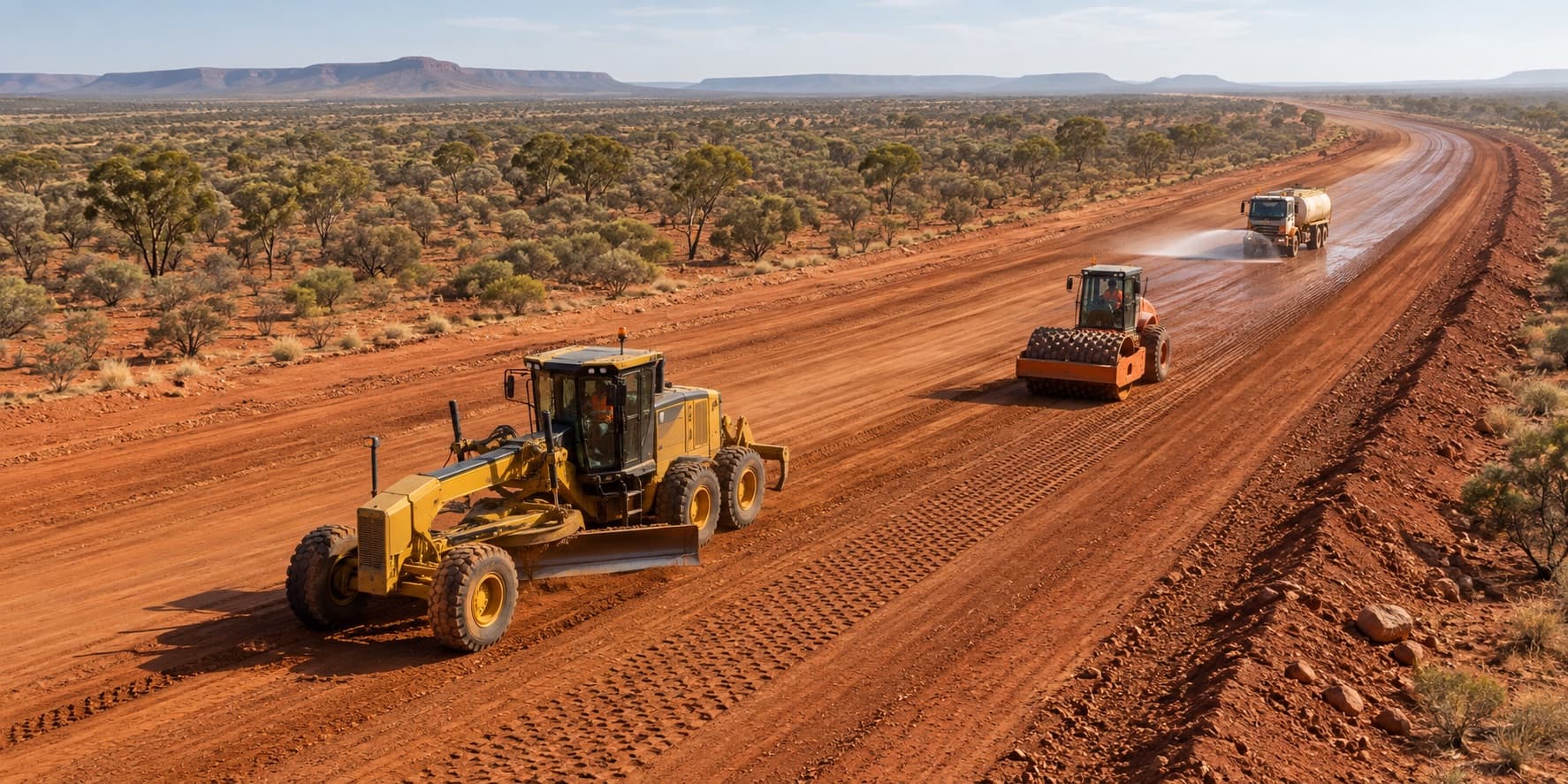
Link material, lift thickness, amplitude, frequency and verification method.
01 · Why it mattersWhat actually decides the outcome
Compaction is a verified result, not a number of passes. The roller has to suit the material (granular or cohesive), the lift thickness and the moisture condition. It must reach the required density or proof-roll result without damaging adjacent services or structures. Vibration amplitude and frequency settings change what the roller actually does.
02 · Before you hireWhat to check
- Material classification and moisture condition
- Loose lift thickness permitted by the specification
- Test method (density testing, proof-roll, deflection)
- Drum type: smooth, padfoot or pneumatic
- Proximity of services, walls and structures
- Working width and access
03 · Supplier questionsWhat to ask the hire company
- Which drum and vibration settings suit this material?
- Can the roller run static near sensitive structures?
- Is intelligent compaction measurement available?
- Is a water cart included or separate?
Adding passes to fix low density test results when the real problem is moisture content or lift thickness.
04 · Put it in writingConfirm the assumptions
Record the nominated machine (make, model and configuration), the attachments, the transport method and the support arrangements in the hire agreement. If any assumption changes on site, the rate, programme or safe work method may change with it. Return it to the project team before the machine is dispatched.
05 · Find suppliersCompaction Equipment Hire suppliers
Smooth-drum, padfoot and pneumatic rollers, plate compactors and rammers for fill, subgrade and asphalt. Browse all compaction equipment hire suppliers and selection notes.